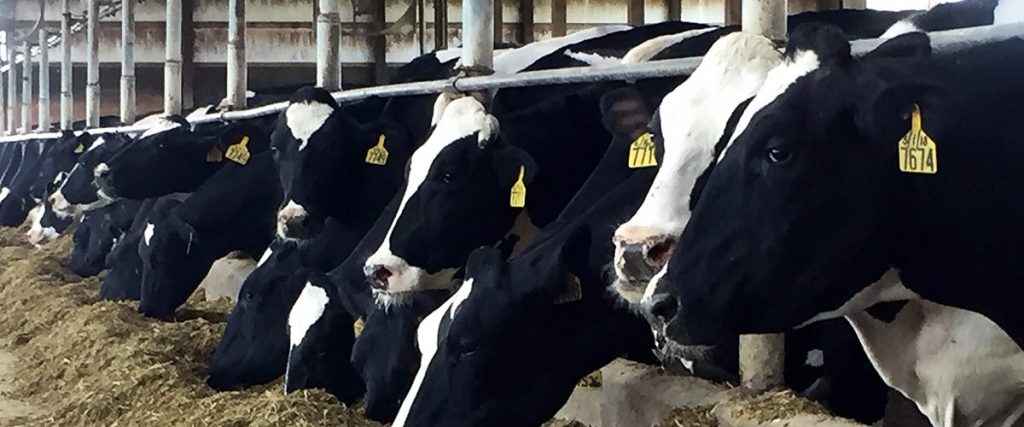
Heat stress in dairy cattle is a multi-factor challenge. It is not simply a case of cows feeling uncomfortable in hot weather. When temperatures rise, especially alongside high humidity, the cow has to work harder to regulate her body temperature. That creates pressure on intake, rumen function, gut health, immunity, fertility and milk production.
For high-performing dairy cows, this can quickly become costly.
What happens during heat stress?
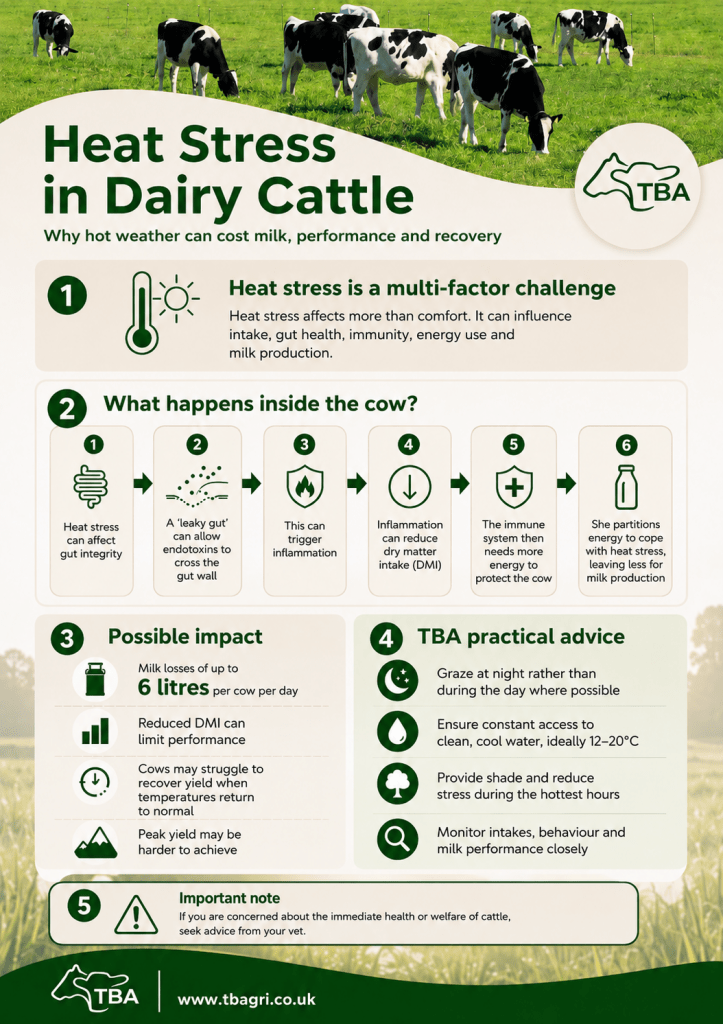
When a dairy cow is under heat stress, one of the first things often affected is dry matter intake, also known as DMI. She eats less because digestion generates heat, and reducing intake is one of the ways the cow tries to limit internal heat production.
The problem is that less intake means fewer nutrients available for milk production, body maintenance and recovery. At the same time, the cow is using more energy to cope with the heat challenge itself.
This is where heat stress becomes more complex than a simple drop in appetite.
The link between heat stress, gut health and inflammation
Heat stress can affect gut barrier function. This is sometimes described as “leaky gut”, where the gut wall becomes more permeable. When this happens, endotoxins can cross the gut wall and trigger an inflammatory response.
That inflammation can further reduce DMI, creating a difficult cycle:
- The cow is hot, so she eats less.
- The gut may become more vulnerable, increasing the risk of endotoxin challenge.
- The immune system is activated to protect the cow.
- More energy is used for defence and survival, rather than milk production.
- The cow starts partitioning energy away from performance and towards coping with the heat stress challenge.
In practical terms, the cow is not just producing less because she is eating less. She is also using more of the energy she does consume to deal with the physical and immune pressure caused by heat stress.
What does this mean for milk yield?
The impact can be significant. Heat stress can lead to milk losses of up to 6 litres per cow per day in some situations, particularly where cows are already under pressure or where the heat challenge is prolonged.
The concern is not only the immediate loss. Once temperatures return to normal, cows may not automatically bounce back to previous yield levels. If heat stress hits during early lactation, or around the period when cows should be moving towards peak yield, she may struggle to recover fully and may never quite meet her expected peak.
That makes prevention and early action far more valuable than trying to correct the problem once the losses are visible in the tank.
Signs farmers should be watching for
Heat stress can show itself in several ways, including:
- Reduced feed intake
- Lower milk yield
- Increased standing time
- Panting or faster breathing
- Reduced rumination
- Looser dung
- Lower butterfat
- Fertility issues
- Cows gathering around water points or shaded areas
- A drop in intakes or milk may be one of the first measurable signs, but by that stage the cow may already be under metabolic and immune pressure.
Practical management: graze at night where possible
One practical step TBA recommends is to graze at night rather than during the day where the system allows.
Night grazing can help reduce the cow’s exposure to peak daytime temperatures and allows her to graze during cooler hours. This can support intake and help reduce the pressure on cows during periods of hot weather.
Other practical considerations include:
- Ensuring constant access to clean, fresh water ideally 12-20 degrees C
- Providing shade where possible
- Avoiding unnecessary handling during the hottest part of the day
- Reviewing ration density when intakes are under pressure
- Maintaining forage quality and palatability
- Monitoring high-yielding and fresh-calved cows closely
- Checking trough space and feed availability
- Supporting rumen function and overall digestive health
- You could also set up a water sprinkler system on entry and exits of the parlour to help evaporative cooling
Every farm system is different, so the best approach is usually a combination of environment, grazing management, nutrition and close observation.
Nutrition has an important role to play
During hot weather, cows may eat less but still need to maintain performance, immune function and health. This means ration balance becomes even more important.
Supporting dry matter intake, rumen stability and nutrient supply can help reduce the impact of heat stress on performance. Good-quality forage, consistent feeding, fresh feed availability and appropriate supplementation all have a part to play.
TBA works with farmers to review forage, feed and nutritional strategy so that cows are supported through seasonal challenges, including periods of heat stress.
Act before the drop happens
The best time to plan for heat stress is before it starts showing in the milk tank.
If you know warmer weather is coming, now is the time to look at grazing patterns, water access, feed presentation and ration support. Small changes made early can help protect cow comfort, intake and performance.
For advice on supporting your herd through heat stress, speak to the TBA sales team. We can help you review your current feeding approach and identify practical steps to support your cows through warmer weather.
Important note
If you are concerned about the immediate health or welfare of any cattle, seek advice from your vet as soon as possible.
Written by Trevor Birchall and Sophie Parker-Norman of Abireo